
This book is full of intrigue…it made me laugh, it made me cry, it made me want to ride a bicycle again. It’s full of close friendships, family relationships, unexpected gifts and the importance of love and being kind to each other. You will enjoy this book even if you aren’t a seamstress. There are many Paris details and time/generational switches that reminded me of SARAH’S KEY, but this is a happier book. I didn’t want to put it down and when I finished I had to read it again.
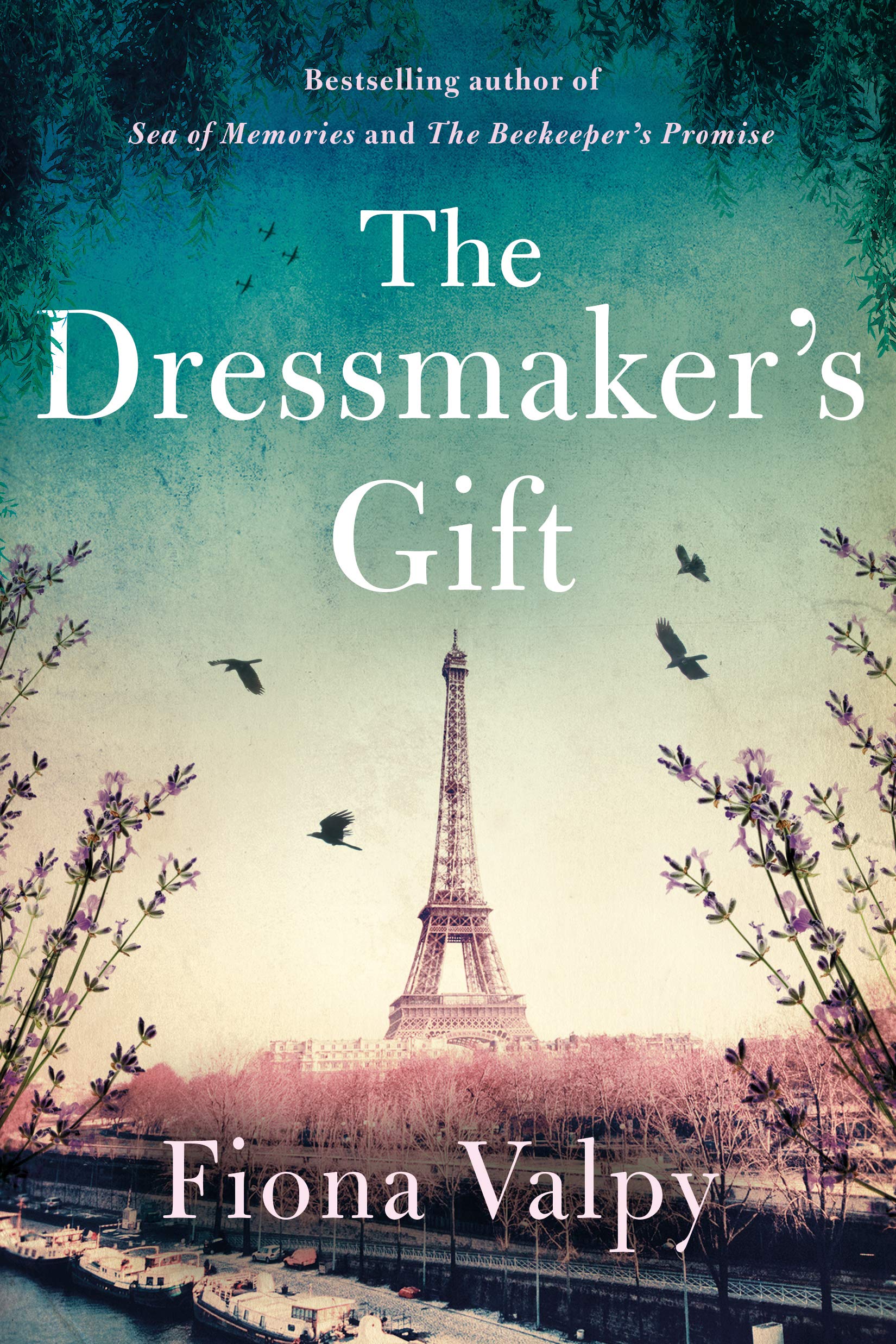
So an elemental question when reading this book is “which gift?” When people learn I sew, many people say that’s a gift. The ability to sew well may be a talent, witness my college friends who speak of sewing both sides of a skirt together in Home Ec class and never trying to sew again. Perhaps the ability to visualize what fabric will look good with a pattern is a gift or talent. But the ability to sew well and make a garment fit takes lots of practice, becoming a skill, which this book does not minimize. Sewing was the seamstress’ job, and their skill was established before being hired, just as typists routinely had speed tests in interviews to show their Words Per Minute (WPM).
This book starts with a silk dress pieced from scraps, seen in 2017 (hereafter referred to as “the present”), seen by an unnamed narrator. The book shifts between the present time and the 1940’s, when three young girls were friends in Paris, working at one of the premier fashion establishments. Like most sewists, they had different backgrounds and various specialties. But within the fashion house, the sewists worked together and helped each other when necessary, much like sewists do today–there just aren’t very many of us, so it’s mainly an online community!
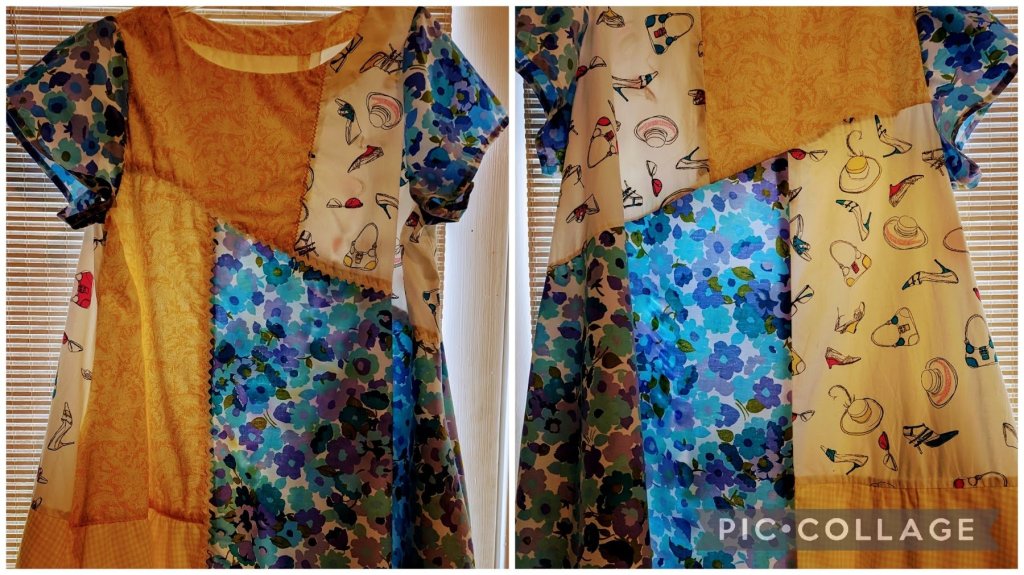
I could go on for several paragraphs about the dress pieced from scraps, but that would be boring to anyone who doesn’t sew. I have sewn a patchwork dress from cotton (large pieces) and I have occasionally pieced small sleeves or pockets when I didn’t have enough fabric-it’s challenging to do with sturdy cotton fabric, but would be much harder with silky fabric. The grain of the fabric (the horizontal and vertical threads, called weft and warp) have to be lined up to match each other to prevent bumpy, puckered seams. I understand the young seamstress putting much work into a dress that she couldn’t afford otherwise, especially if living in Paris, the fashion center of the world, but I can’t imagine sewing a complete dress by piecing silk scraps-I appreciate the sewing expertise involved, but I am glad I don’t need to do so!
We’ve all heard of the things women did in wartime to feel beautiful… having a friend paint a line down the back of their legs to imitate stockings-I never heard how they kept it from smudging. One of my aunts told me how they painted their legs with coffee grounds or tea bags to help with the subterfuge, since bare legs were “indecent.” Women learned to “make do and mend,” shortened or lengthened hems to be in the current mode, added embroidery to cover holes, added trim to cover worn edges, all in an effort to look good. Most of us don’t go to much trouble today: we wash, go, repeat, then replace.
This book made me think, and feel very warmly towards my friends, they’re very good friends but thankfully, we’re not tested by anything. How many of us would loan a bicycle to someone we barely know? How would we behave in an occupied city? What would you do to help someone you don’t know at all? How about keeping secrets…can we keep a secret to protect others? Life was as quiet as possible for the French people in Nazi-controlled France, so different from our spill-it-all-on social media world. Whom could one trust?
This book was about mothers and daughters, fathers , brothers and daughters, grandmothers and granddaughters, much of how we don’t really know their stories. Elsewhere on this blog https://phibbard.blog/2018/04/01/grandmother-irene-and-her-sewing-machine/, you can read about my grandmother Irene, my dad’s mother, an amazing seamstress who fostered my own love of sewing, even though she suffered dementia when I was 9. My mom sewed, and I’m grateful to her for enrolling me in Singer’s sewing camp when I was 11 and 12-it started a lifelong habit. But I never knew anything about my mom’s mother, who had passed away before I was born. other than she was a wonderful housekeeper, winning many blue ribbons for her cakes, pies and canned goods at the county fair. I remember being so surprised by a conversation during my dad’s funeral visitation-a childhood friend of my mom’s told me how “Mama Gurt,” as she was called, had been a “pillar” of her church (an unusual description for a woman of her time), running the entire Sunday School, and a voice for good in the community. I thought she was just a modest housewife, although I knew she fed the poor from her garden during the Depression. This book may make you wonder what you don’t know about the generations in your own family. Many of our gifts and talents are a result of (sometimes a reaction to) our own families of origin. (If you want to read an encouraging story about depression and Dust Bowl times, try West With Giraffes, by Lynda Rutledge. See my review on Goodreads.)
As you can tell from the cover, this book is set in Paris, at least mostly. There’s many places I want to visit, and I enjoy ticking them off gradually as we’re able to travel. Everywhere I go, there are new places to explore. After reading of present-day Paris in this book, maybe France is one to add to the list, which gets longer all the time.

 Hibbard House (full of Basil, Books & Labradors)
Sounds like a great read! I have been reading books about WWII London since my mother was there and had my sister during the Blitzkreig. Another interesting note – I took the Singer sewing class too! Good for our mothers!
LikeLiked by 1 person
Wow, what a story you have! The Singer class was fun. I think it’s easier to learn from someone other than one’s mom.
LikeLike